
Our Latest Blogs
Our aim was to make technical information about solar energy easily accessible to our audience by presenting it in a straightforward and conversational language.
Contact Us
October 31st, 2025
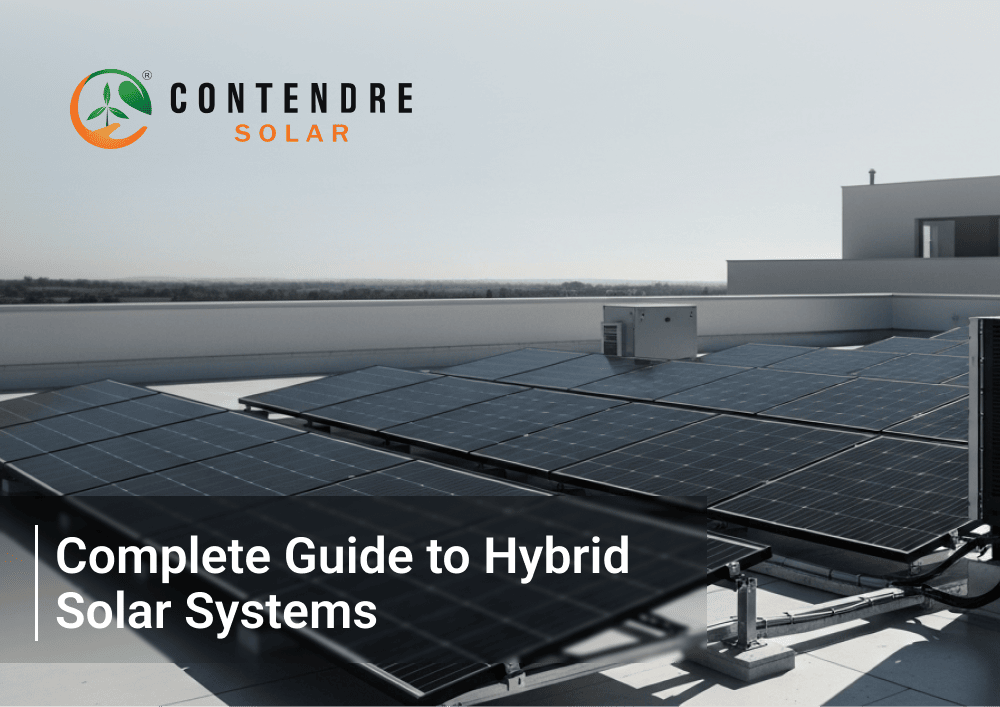
The energy demand in India is rising, and both residential and commercial customers are pursuing a more reliable, sustainable and affordable energy supply to fuel their spaces. The best solution for the modern age is a hybrid solar system with battery backup. Hybrid solar systems are the best of both worlds, on and off-grid, providing continuous power supply, smaller energy bills and reliable energy.
A hybrid solar system provides smart, sustainable energy management for your home, office and business, ensuring reliable energy regardless of outages or natural disasters emergencies so your home, devices, and equipment can count on electricity for all your lighting and energy needs.
A hybrid solar system functions as a comprehensive energy management tool, and is more than simply an installation of solar panels. It consists of solar panels, battery backup and the utility grid connection to provide reliable energy. Solar energy is used to power your home, or business during the day and the battery is charged. In the evening, or in the event of a power outage, your system will switch to battery power automatically, or possibly to grid electricity if there is not enough energy stored in the battery.
This system incorporates the reliability of a grid connection and gives you independence from a battery storage system. The hybrid solar system is the perfect power source in India because of the challenges created by power outages, the ongoing high prices for electricity, and unreliable access to electricity supply. A hybrid solar panel system provides access to renewable energy, reduces energy costs, and ensures reliable and responsible usage of solar energy sparingly for sustainable living.
See Also – On-Grid vs Off-Grid Solar Systems: A Complete Guide
Hybrid solar systems are flexible and can be tailored to handle demand for energy in situations.
There is a hybrid solar system for homes and a hybrid solar system for commercial buildings, which provides flexibility for use in most applications.
A clear understanding of the Hybrid Solar System components and benefits provides a brief explanation of how the systems provide reliable energy.
The components work together to produce the Advantages of Hybrid Solar Systems for a continuous supply of usable electricity, improved efficiency and cost savings.
Hybrid Solar System benefits make them a great option for today's homes and businesses.
Read More: Selecting India’s Best Solar Panel Company
These Advantages of Hybrid Solar Systems make them a great investment for residential and commercial purposes.
Hybrid solar solutions are common throughout India's many segments:
The flexibility of Hybrid Solar System with Battery Backup ensures it is suitable for nearly any application that requires a guaranteed electricity supply.
While hybrid systems have many advantages, there are some important considerations:
Being mindful of these considerations will allow you to plan and best set you up to enjoy your hybrid solar system with battery backup!
The hybrid solar system cost in India is determined by the system size, battery capacity, and difficulty of installation. An average 3–5 kW residential system will cost around INR 2.5 lakh to INR 4 lakh. Commercial hybrid solar systems prices are based on energy needs.
The Government of India provides several pieces of support such as government subsidy for hybrid solar systems in India to help reduce your initial investment thus allowing individuals to afford hybrid solar systems at home or for business while saving money for decades.
Read More: Rooftop Solar for Commercial and Industrial Applications
For the best output of a hybrid solar system installation, it is best to have trained and qualified professionals install the system. Installation includes:
Having a qualified professional do the install will ensure longevity and maximize hybrid solar energy capability for your home or business.
Contendre Solar, the best Hybrid Solar System Company in India, offers hybrid solar efficiently and reliably for homes and businesses.
Choosing Contendre Solar, a leading solar panel manufacturer in India, to supply your hybrid solar panel system ensures a proven and efficient solution that meets the energy needs of your home or business.
Hybrid Solar Power is expected to make a significant contribution to India's energy sector due to the increasing electricity demands and increasing renewable energy source adoption. The falling cost of solar panels along with improvement in battery technology and greater awareness of energy efficiency are all integral components of movement toward mainstream use.
In the future, we will see substantial amounts of Smart Hybrid Solar Systems, which will have superior monitoring functions, will manage in-house and commercial solar energy through Artificial Intelligence, and will have superior energy storage systems to promote more effective energy use in the home and commercial enterprise.
A Hybrid Solar System with Battery Backup is a great option for anyone looking for reliable energy, sustainable energy, and non-stop energy. Hybrid systems achieve the best of solar energy cost savings with the usefulness of backup energy. From saving you from those electricity bills to providing you power during outages, it is always convenient to have instant backup energy.
Working with a good company, such as Contendre Solar, it is an incredibly easy, cost-effective, and long-term benefit to switch over to a hybrid solar power system for your home or business.

Generally, lithium-ion batteries will last 5–10 years and lead-acid batteries will last 3–5 years depending on the usage/maintenance of the system.
Yes, if there is a portable hybrid system i.e. a system that does not make any major changes to the roof, you could have a hybrid system for a rental program.
Yes, ongoing maintenance, which keeps the system operating at optimal performance consists of cleaning the panels, checking the health of the batteries and checking the inverter.
Yes, there is a Government Subsidy for Hybrid Solar Systems in India that Homeowners and businesses can reduce the end user costs.
The system size is based on your daily energy usage, the amount of sun available, and how much battery backup you would like to have.
Experts like Contendre Solar can help you size it right.
Most components will have an inverter warranty of 5-10 years. Additionally, solar panels have a warranty that lasts between 10-25 years, depending on the manufacturer.
Banks/Financial Institutions typically offer bank loans or EMI (monthly instalments) options to help make hybrid solar systems affordable for homes and businesses.